|
Each month we will be checking
what we feel is an album that definitely may be worth revisiting.
Sometimes it is easy to forget how great some of these releases
were. Many of them went on to have significant influence on the
music of today. When going back and checking them out again you
will often find forgotten brilliance and just maybe it will give
you a new spark of inspiration for creating something awesome on
your own. (-: Thanks to Wikapedia
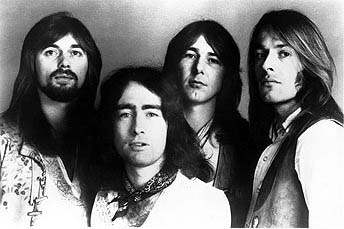
BAD COMPANY
English rock supergroup
One of the most acclaimed bands of the classic rock era,
England's Bad Company has put its indelible stamp on rock 'n' roll with
a straight-ahead, no-frills musical approach that has resulted in the
creation of some of the most timeless rock anthems ever. Led by the incomparable
singer and songwriter Paul Rodgers, arguably the finest singer in rock
'n ' roll and a huge songwriting talent.
Formed in 1973, Bad Company came to life when Rodgers
was looking to start anew after the disintegration of his legendary
band Free. His powerhouse vocals and songwriting were a main ingredient
during Free's impressive five-year run; a period of time that saw the
release of seven extremely influential albums that featured Free's
minimalist blues-rock approach. Included among Free's dynamic body
of work is the 1970 smash, "All Right
Now," one of the most recognizable rock anthems ever recorded. Lyrics
and melody by Rodgers. He was Free’s main songwriter. |
 |
Rodgers had met Mott The Hoople guitarist Mick Ralphs and after jamming together
and listening to new songs that Ralphs had penned and songs that Rodgers had
penned, Ralphs made the decision to leave Mott and form a new band with Rodgers. The
duo recruited former King Crimson bassist/vocalist Boz Burrell, added drummer
Simon Kirke and Rodgers Christened the band Bad Company. Rodgers’ brought
in Led Zeppelin manager Peter Grant and Bad Company became the first band
signed to Zeppelin's Swan Song label. "I had to fight to get the management
and the record company to accept the name Bad Company," explains Rodgers. "They
thought it was a terrible name. Peter Grant called a meeting and the band
met beforehand. I told them that I had been through this before with Free
as Island Records had wanted to call us the Heavy Metal Kids. We agreed to
go in and tell them that we were going to be called Bad Company and that
was the end of the story. As soon as Peter heard how strongly I felt about
the name, he became very supportive and together we turned the record company
around."
Bad Company was an instant hit worldwide.
Their 1974 self-titled debut went platinum five times over and featured the
smash hits, "Can't Get Enough," (a
Number One single) and "Movin' On" along with electrifying rock anthems like "Ready
For Love," "Rock Steady" and the title track. Because of their association with
Grant, a unique opportunity arose for them when it came time to record that classic
first album in November 1973.
 |
"We
were bursting at the seams to get into the recording studio," says Rodgers. "Led
Zeppelin had a mobile studio together at Headley Grange all ready to go,
but they were delayed for two weeks.
Peter told us that if we were quick,
we could probably use the studio to lay a couple of tracks down. We steamed
in and put the entire album down. Headley Grange was very atmospheric.
We had the drums set up in the hallway and the guitars in the living
room.
We did interesting experiments like placing the
vocal microphone way out in the fields for the song 'Bad Company.'
We recorded that track late at night underneath a fall moon." |
The eight tracks recorded at Headley Grange clearly defined
the band's stripped-down sound. Rock, blues and even country influences were
skillfully layered within songs such as the beautiful Rodgers-penned ballad "Seagull," the straight-ahead
rock of "Movin' On" and "Rocky Steady." Also featured from those fertile sessions
at Headley Grange are "Little Miss Fortune," the brooding blues rock classic "Ready
For Love" and the previously unreleased
"Superstar Woman." While "Superstar Woman" ultimately did not become part of
Bad Company's catalog, Rodgers' belief in the song never diminished. He would
eventually record a new version of the song for
"Cut Loose," his 1983 solo album.
"We were influenced by people like Jimi Hendrix, Cream,
and, to a certain extent, the Beatles," explains Rodgers. "We were just trying
to play what felt good and natural. I think that is what gave us our identity
as a band." “We
always tried to be natural,” says Ralphs. “We would play
soul and blues favourites at rehearsals instead of learning new songs. My
favorite guitarist, the man inspired me to play, was Steve Cropper. I
guess we wanted to be the MG’s with Otis Redding. Basically, we
played like a bar band but soon it was clear that the bars were getting very
large indeed!”
Taking full benefit of Swan Song's visibility and Grant's press and marketing
skills. Bad Company made their formal debut at Newcastle City Hall in March
1974. The rousing response they enjoyed from fans and critics in the UK propelled
the group to America on a high note, brimming with confidence. "In America,
remembers Rodgers, "the response to Bad Company was overwhelming, night after
night. When we started out on tour, the album had just broken into the charts.
Three months later, we were at number one. We were received with open arms."
In the United States, Bad Company's popularity soared. While some fans had
recognized Rodgers' voice from "All Right Now," the group's energetic stage
shows wowed audiences largely unfamiliar with the work of Free or Mott The
Hoople. FM radio devoured their debut disc, ultimately working
"Can't Get Enough," "Rock Steady," "Bad Company," "Ready For Love"
and "Movin' On" into regular rotation. Rodgers' passionate, soulful vocals
were reminiscent of one of his idols, Otis Redding, and struck a chord with
the group's rapidly expanding fan base.
With a number one album to their credit in America, Bad Company returned to
London triumphant. "The end of our first tour, the four of us were summoned
to Peter Grant's suite," remembers Kirke. "We thought we had done something
wrong. We all went up to his room, coming in like toe-scuffing schoolboys.
Peter said, 'Now listen guys, it's been a long tour and you've worked your
asses off.' Then he paused for dramatic effect and we thought, what the fuck
have we done. He pulled back this sheet that had been on the ground and said,
1 hope there will be a lot more of these in the future.' Our gold albums for
Bad Company were there.
Heartened by the response to Bad Company, the group hired Ronnie Lane's mobile
studio and had it installed at Clearwell Castle in Gloucestershire, England
in September 1974. "That was an interesting place to record," states Rodgers. "Where
next after Headley Grange but an old haunted castle! We had been touring very
hard but we were still able to come up with the goods in the end. By comparison,
we hadn't done any touring before our first record."
Triple-platinum album Straight Shooter
Bad Company followed up their initial
success with the 1975 release of the triple-platinum album Straight Shooter
which contained the Top Ten smash ballad "Feel
Like Makin' Love" which was Grammy nominated. "I started writing ‘Feel
Like Makin Love’ when I was 18 and felt it needed an extra something. When
I played it for Mick he added the big guitar bada ba bada ba then I felt the
song was finished.” Other tracks from the album, such as
"Shooting Star" have long since become concert and radio staples. "I remember
Paul was singing a few of the verses for that song in the airport as we were
going over to America to start our second tour,"
remembers Kirke. "He had taken his guitar on the plane with him and was tinkering
around with the song on the flight over."
"I just started singing the lyric, 'Johnny was a schoolboy...,' and I was thinking’ continues
Rodgers. "Where had I heard it? Then it dawned on me that I hadn't heard it
anywhere before. I quickly grabbed a pen and paper and wrote the lyrics and
chords down. The song flowed out of me. “Sometimes a song
begins life on the piano, guitar or even the bass guitar and often I hear the
whole song structure in my head.” ” Since then, people have asked
me who it is about including whether it's about (former Free guitarist) Paul
Kossoff. Actually, the song is about all of the casualties of rock music because
there have been way too many."
Ralphs says, "I tend to write more simplistic songs, but believe me,
it's very hard to write a simple rock song on guitar that has something special
without sounding ordinary."
Eagerly anticipated by the group's fans. Straight Shooter enjoyed international
success, reaching number three on both the UK and US album charts. The ecstatic
response to the album accelerated the group's momentum and their standing as
one of the most popular concert attractions in the world. "In 1975, we were
able to come back and tour America as a headliner," recalls Kirke.
"It had been an amazing year."
"There was quite a bit of pressure on us being the first artists signed to
Zeppelin's Swan Song label," states Rodgers. "Behind the scenes, we did take
the mickey out of each other mercilessly. We would stand on their side of the
stage and yell 'Rubbish!' and the like at them. We never did shows together,
but we did jam quite a bit. There was a real rapport between the two bands."
"There is no doubt in my mind that without Peter Grant we would not have reached
the level of success we achieved," echoes Ralphs. "His clout and insights were
essential to our elevated status. He was a great manager and a lovely man."
The wildly successful Run With The Pack in 1976 was the band's third consecutive
platinum seller, fueled by the infectious Top 20 single success of the Coasters'
classic "Youngblood." The band met in Grasse, France in September 1975 to begin
recording the album. Upon its release, it soared to number five in both the
US and the UK. With three albums now to their credit, the central ingredient
to the group's remarkable success was their steady stream of first rate original
material. Rodgers and Ralphs were the group's composers. "I always thought
it was important for the group to have more than one writer," states Rodgers.
Coupled with the strength of the group's song writing was the clarity and unmistakable
power of Rodgers' voice. Rodgers moved with ease among a wide range of emotions
and musical styles. Rodgers "Silver, Blue & Gold" celebrated the
group's skills for ballads, highlighting a softer, more introspective vocal
performance by Rodgers.
The expanded arrangement of the album's title track effectively incorporated
strings. The group had previously experimented with strings on Straight Shooter's "Weep
No More," but Rodgers composed "Run With The Pack" with a string arrangement
in mind from the outset. "I wrote that song on the piano and when I played
it to the guys they fell right in," detail Rodgers. "In my head, the strings
were always a part of the song. Jimmy Horowitz came around to the studio and
he was to do the scoring. Jimmy came to the session with a tape recorder in
hand and while the track was playing asked me how I wanted the strings in the
background. I sang the part that I had been hearing in my head and he went
off and wrote it up."
Burnin' Sky, with its moody and atmospheric title track, reached gold status
in 1977, followed by the double-platinum wallop of Desolation Angels in March
1979.
Next Bad Company gathered at Ridge Farm Studios in Dorking, Surrey to record
the superb Desolation Angels. "Rock 'n' Roll Fantasy opened the album and set
the tone for what was to follow.
"I remember walking into the studio and Paul was playing this huge riff
on the guitar," remembers Kirke. "He had an octave divider device on his guitar
and the riff was great. We recorded the song that day."
"I wanted to write an anthem which expressed my feelings about everything in
rock 'n' roll," explains Rodgers. "I wanted to cover the whole spectrum, particularly
that rock 'n' roll was a magical illusion of colour, sound and light."
Another of the album's highlights was Ralphs’ rollicking "Oh Atlanta." "We
always had a great time in Atlanta and I think you can hear a bit of the country
influence in that song." States Kirke.
The group's affinity for country music was evident throughout Desolation Angels.
The western-flavored "Evil Wind" was a noteworthy example.
"'Evil Wind' was a strong track," states Kirke. "That was fall of Paul's tumbleweed-across-the-plains
imagery. I think Paul was a cowboy or one of those bounty hunters in another
life."
The wide approval enjoyed by Desolation Angels reaffirmed Bad Company's commercial
status. The album spawned the gold selling classic, "Rock
& Roll Fantasy," a staple on classic rock play-lists everywhere. The band
toured the globe countless times during this period, playing to enthusiastic
sell out crowds everywhere.
truthfully we all needed to stop
But there would be a price to pay for all of
this success. According to Rodgers, "at
this same time there came a point when I felt the band and its commitments
had completely overtaken my life. I needed to get my feet on solid ground and
spend some time watching my children grow, no one else had children at the
time so they could not comprehend what I was living or feeling. I never
left music, I left the band." After the release of the Top 30 album Rough Diamonds
in 1982, Rodgers left the band to take time off and to eventually pursue a
Grammy nominated acclaimed solo career.
"Looking back, we stopped at the right time," recalls Ralphs. "Paul wanted
a break and truthfully we all needed to stop. Bad Company had become bigger
than us all and to continue would have destroyed someone or something. From
a business standpoint, it was the wrong thing to do, but Paul's instinct was
absolutely right."
In 1986, Ralphs and Kirke resurrected the Bad Company name. Rodgers who
was forming The Firm with Led Zeppelin’s Jimmy Page was asked for his
permission to use the name. “I felt pressured into allowing them
to continue using the name I felt that they should form a new band, with a
new name and write their own catalogue of songs.”
Precisely what Rodgers did with The Firm. “But in the end
I agreed thinking that they would move forward with integrity, I was wrong.” Over
a six -year span from 1986 to 1992, this version of the band released four
albums including Fame and Fortune, Dangerous Age, the platinum selling Holy
Water and Here Comes Trouble. The band released two more albums, 1995's Company
of Strangers and Stories Told and Un told in 1996. While the music was fairly
well played on tours, nothing could replace the writing, stage presence and,
of course, those one-of-a-kind vocals that Rodgers brought to the equation.
Fans and critics alike began to clamor for a reunion of the original band and
finally, it happened when Rodgers got together with Ralphs and Burrell in England
to discuss the release of an Anthology of music. Rodgers suggested adding
4 new songs and went to work writing two “Hammer of Love” and “Tracking
Down a Runaway” while Ralphs wrote
“Hey Hey”, and “Ain’t it Good”.
The long awaited reunion came together in 1999 and saw the band not only complete
a rousing 30-date U.S. tour that drew sell out crowds and much critical acclaim,
but also oversee the release of the acclaimed Original Bad Company Anthology
that year as well, a dynamic two-CD, 33-song overview of the band's career
released on Elektra Records.
It features six B-sides and out takes including "Easy On My Soul" and "Whiskey
Bottle" that were recorded during the Straight Shooter sessions along with
an alternate recording of "Do Right Woman" that, according to Rodgers, was
recorded live around a campfire. "The fire was sparking and crackling so we
decided to go with the clean studio version for Run With The Pack, says Rodgers.
"But with hindsight, it's a great track." Another previously unreleased track
is the Boz Burrell-composed "Smokin' 45" that was recorded during the "Burnin'
Sky" sessions. The Anthology also contains four new tracks including the Anthology's
two charting singles, new songs "Hey Hey" by Ralphs and "Hammer of Love," by
Rodgers which received significant radio and chart action exemplifying
just how timeless Bad Company's music is. Only the Bad could be this good.

|