Each
month we will be checkin what we feel is an album that definitky
may be worth revisiting. Sometimes it is easy to forget how
great some of these releases were. Many of them went on to
have signifigant influence on the music of today. When going
back and checking them out again you will often find forgotten
brilliance and just maybe it will give you a new spark of inspiration
for creating something awesome on your own. (-: Thanks
to Wikapedia
Exile on Main St. is the tenth British
and 12th American studio album by English rock band The Rolling Stones.
Released as a double LP in May 1972, it draws on many genres including
rock and roll, blues, soul, R&B, gospel and country. The release
of Exile on Main St. met with mixed reviews, but it is now generally
regarded as the band's best album.In 1987, as part of their 20th anniversary,
Rolling Stone magazine ranked it third on the 100 Best Albums of the
Last Twenty Years. In 2003, the album was ranked 7th on Rolling Stone
magazine's list of the 500 greatest albums of all time, the highest a
Rolling Stones album ranked on the list.
Exile on Main St. was written and recorded between
1968 and 1972. Mick Jagger said "After we got out of our contract
with Allen Klein, we didn't want to give him [those earlier tracks]," as
they were forced to do with "Brown Sugar" and "Wild Horses" from
Sticky Fingers. Many tracks were recorded between 1969 and 1971 at Olympic
Studios and Jagger's Stargroves country house in England during sessions
for Sticky Fingers. |
|
By the spring of 1971 the Rolling Stones owed more in
taxes than they could pay and left Britain before the government could seize
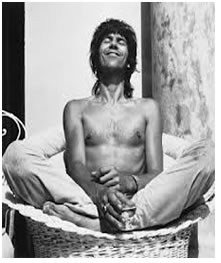
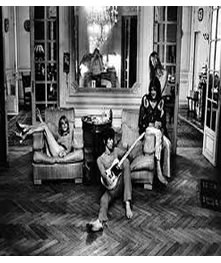
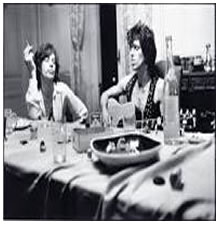
their assets. Mick Jagger settled in Paris with his new bride Bianca, and
guitarist Keith Richards rented a villa, Nellcôte, in Villefranche-sur-Mer, near Nice. The other members
settled in the south of France. As a suitable recording studio could not be
found where they could continue work on the album, Richards' basement at Nellcôte
became a makeshift studio using the band's mobile recording truck.
Recording began in earnest sometime near the middle of June.
Bassist Bill Wyman recalls the band working all night, every night, from eight
in the evening until three the following morning for the rest of the month.
Wyman said of that period, "Not everyone turned up every night. This was,
for me, one of the major frustrations of this whole period. For our previous
two albums we had worked well and listened to producer Jimmy Miller. At Nellcôte
things were very different and it took me a while to understand why." By
this time Richards had begun a daily habit of using heroin. Thousands of dollars
of heroin flowed through the mansion each week in addition to a contingent
of visitors that included William S. Burroughs, Terry Southern, Gram Parsons
and Marshall Chess (who was running the Rolling Stones' new label). Parsons
was asked to leave Nellcôte in early July, 1971, the result of his obnoxious
behaviour and an attempt by Richards to clean the house of drug users as the
result of pressure from the French police.
sessions in the basement
Richards' substance abuse prevented him from attending
the sessions that continued in his basement, while Mick Jagger and Bill Wyman
were often unable to attend sessions for other reasons. This often left the
band in the position of having to record in altered forms. A notable instance
was the recording of one of Richards' most famous songs, "Happy". Recorded in the basement, Richards
said in 1982, "'Happy' was something I did because I was for one time
early for a session. There was Bobby Keys and Jimmy Miller.
|
We had nothing to do and had suddenly picked
up the guitar and played this riff. So we cut it and it's the record,
it's the same. We cut the original track with a baritone sax, a guitar
and Jimmy Miller on drums. And the rest of it is built up over that track.
It was just an afternoon jam that everybody said, 'Wow, yeah, work on
it'".
The basic band for the Nellcôte
sessions consisted of Richards, Bobby Keys, Mick Taylor, Charlie Watts,
Miller (a skilled drummer in his own right who covered for the absent
Watts on the aforementioned "Happy" and "Shine a Light"),
and Jagger when he was available. Wyman did not like the ambience of
Richards' villa and sat out many of the French sessions. Although Wyman
is credited on only eight songs of the released album, he told Bass Player
Magazine that the credits are incorrect and that he actually played on
more tracks than that.
The other bass parts were credited to Taylor,
Richards and session bassist Bill Plummer. Wyman noted in his memoir
Stone Alone that there was a division between the band members who freely
indulged in drugs (Richards, Miller, Keys, Taylor, the engineer Andy
Johns) and those who abstained to varying degrees (Wyman, Watts and Jagger). |
Los Angeles Additional basic tracks (probably only "Rip this Joint", "Shake
Your Hips", "Casino Boogie", "Happy", "Rocks
Off", "Turd on the Run" and "Ventilator Blues") were
begun in the basement of Nellcôte and taken to Sunset Sound Recorders
in Los Angeles where numerous overdubs (all piano and keyboard parts, all lead
and backing vocals, all guitar and bass overdubs) were added during sessions
that meandered from December 1971 until May 1972. Some tracks (such as "Torn
and Frayed" and "Loving Cup") were freshly recorded in Los Angeles
Although Jagger was frequently missing from Nellcôte, he took charge
during the second stage of recording in Los Angeles, arranging for the keyboardists
Billy Preston and Dr John and the cream of the city's session backup vocalists
to record layers of overdubs. The final gospel-inflected arrangements of "Tumbling
Dice", "Loving Cup", "Let It Loose" and "Shine
a Light" were inspired by Jagger and Preston's visit to a local evangelical
church.
The extended recording sessions and
differing methods on the part of Jagger and Richards reflected the growing
disparity in their personal lives. During the making of the album, Jagger
had married Bianca, followed closely by the birth of their only child,
Jade, in October 1971. Richards was firmly attached to his girlfriend
Anita Pallenberg, yet both were in the throes of heroin addiction, which
Richards would not overcome until the turn of the decade. Even though
the album is often described as being Richards' finest moment, as Exile
is often thought to reflect his vision for a raw, rootsy rock sound,
Jagger was already expressing his boredom with rock and roll in several
interviews at the time of the album's release. With Richards' effectiveness
seriously undermined by his dependence on heroin, the group's subsequent
1970s releases—directed largely by Jagger—would experiment
to varying degrees with other musical genres, moving away from the roots-based
sound of Exile on Main St.
Preceded by the UK and US Top 10 hit "Tumbling Dice",
Exile on Main St. was released in May 1972. It was an immediate commercial
success, reaching #1 worldwide just as the band embarked on their celebrated
1972 American Tour. Their first American tour in three years, it featured
many songs from the new album. "Happy", sung by Richards, would
be a Top 30 US hit later that summer. |
|
Many critics judged Exile on Main St. to be a ragged
and impenetrable record at the time of its release. Lenny Kaye, writing in
Rolling Stone magazine, was typical of contemporary critics who did not consider
the album as anything special. According to Kaye, "There are songs
that are better, there are songs that are worse, and others you'll probably
lift the needle for when the time is due." Kaye concludes by assuring
his readers that "the
great Stones album of their mature period is yet to come".
Quite Simply the Best
However, the Melody Maker review by Richard Williams
praises the album highly. The review was titled The Stones: Quite Simply
the Best. He states the album "is
definitely going to take its place in history" and "it's the best
album they've ever made". He states: "This is an album which utterly
repulses the sneers and arrows of outraged put down artists. Once and for all,
it answers any questions about their ability as rock 'n' rollers."
|
On the initial critical and commercial
reaction, Richards said, "When [Exile] came out it didn't sell particularly
well at the beginning, and it was also pretty much universally panned.
But within a few years the people who had written the reviews saying
it was a piece of crap were extolling it as the best frigging album in
the world."
Other critics praised the album's rawness and different
styles, from blues to country to soul. The music critic Robert Christgau
concluded in 1972: "Incontrovertibly the year's best, this fagged-out
masterpiece is the summum of Rock '72. Exile explores new depths of record-studio
murk, burying Mick's voice under layers of cynicism, angst, and ennui."
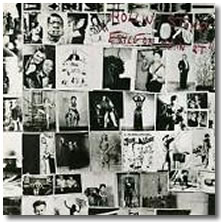
Exile on Main St. featured a gatefold cover and included
a series of 12 perforated postcards with a sequence of images inserts,
all of which were shot by photographer Norman Seeff. The back cover features
various photos of the Stones; the "mystery woman" pictured
in the lower left side is Chris O'Dell, their personal assistant. The
album photography and concept was by Robert Frank and includes images
from his seminal 1958 book The Americans. |
At the time of Exile's release,
Jagger said, "This
new album is fucking mad. There's so many different tracks. It's very rock & roll,
you know. I didn't want it to be like that. I'm the more experimental person
in the group, you see I like to experiment. Not go over the same thing over
and over. Since I've left England, I've had this thing I've wanted to do. I'm
not against rock & roll, but I really want to experiment. The new album's
very rock & roll and it's good. I mean, I'm very bored with rock & roll.
The revival. Everyone knows what their roots are, but you've got to explore
everywhere. You've got to explore the sky too."
In 2003, Jagger said, "Exile is not one of my favourite albums, although
I think the record does have a particular feeling. I'm not too sure how great
the songs are, but put together it's a nice piece. However, when I listen to
Exile it has some of the worst mixes I've ever heard. I'd love to remix the
record, not just because of the vocals, but because generally I think it sounds
lousy. At the time Jimmy Miller was not functioning properly. I had to finish
the whole record myself, because otherwise there were just these drunks and
junkies. Of course I'm ultimately responsible for it, but it's really not good
and there's no concerted effort or intention." Jagger also stated he did
not understand the praise amongst Rolling Stones fans because the album did
not yield very many hits.
Of the album, Richards said, "Exile was a double album.
And because it's a double album you're going to be hitting different areas,
including 'D for Down', and the Stones really felt like exiles. We didn't start
off intending to make a double album; we just went down to the south of France
to make an album and by the time we'd finished we said, 'We want to put it
all out.' The point is that the Stones had reached a point where we no longer
had to do what we were told to do. Around the time Andrew Oldham left us, we'd
done our time, things were changing and I was no longer interested in hitting
Number One in the charts every time. What I want to do is good shit — if
it's good they'll get it some time down the road."
Accolades and cultural references
In 1998 Q magazine readers
voted Exile on Main St. the 42nd greatest album of all time, while in 2000
the same magazine placed it at number 3 in its list of the 100 Greatest British
Albums Ever. In 1987 it was ranked third on Rolling Stone magazine's list
of the best 100 albums of the period 1967–1987. In 1993, Entertainment Weekly named it
#1 on their list of "100 Greatest CDs". In 2003, Pitchfork Media
ranked it number 11 on their Top 100 Albums of the 1970s. In 2001, the TV network
VH1 placed it at number 22 on their best albums survey. The album was ranked
number 19 on the October 2006 issue of Guitar World magazine's list of the
greatest 100 guitar albums of all time[citation needed]. In 2007, the National
Association of Recording Merchandisers (NARM) and the Rock and Roll Hall of
Fame placed the album #6 on the "Definitive 200" list of albums that "every
music lover should own." Its re-release has a highest normalized rating
of 100 on Metacritic based on seven professional reviews, a distinction it
shares with other re-releases such as London Calling by The Clash.
The album and its title have been referenced several
times by other bands. For example, the British acid house group Alabama 3
titled its debut album Exile on Coldharbour Lane. Perhaps the most notable
reference comes from indie singer/songwriter Liz Phair's debut album Exile
in Guyville. Phair herself claims the album to be a direct song-by-song "response" of sorts
to Exile on Main St. Confrontational garage-trash noise-rock band Pussy Galore
released a complete cover of the album that reflected their own personal and
musical interpretations of the songs, as opposed to paying tribute to the original
sound. Post-grunge band Matchbox Twenty paid homage to this album by titling
their 2007 retrospective Exile on Mainstream. Industrial Rock band Chemlab
named the leading track from their album East Side Militia, "Exile on
Mainline", in reference to the Rolling Stones album.
The Departed, a 2006 film by Martin Scorsese, features
a scene in which Bill Costigan mails Madolyn Madden an Exile on Main St.
jewel case containing an incriminating recording of Colin Sullivan conspiring
with crime boss Frank Costello. The same film also uses the song "Let It Loose" from
the album.
Phish covered Exile on Main St.
On 31 October 2009, American rock band Phish covered
Exile on Main St. in its entirety as the "musical costume" for their Halloween show in
Indio, California. The first episode of the fourth season of the Showtime program
Californication is called "Exile on Main St." (There are frequent
Stones references throughout the series.)
In 1994, Exile on Main St. was remastered
and reissued by Virgin Records, along with the rest of the post-Get Yer
Ya-Ya's Out catalogue, after the company acquired the masters to the
band's output on its own label.
Universal Music, which remastered and re-released the
rest of the post-1970 Rolling Stones catalogue in 2009, issued a new
remastering of Exile on Main St. in a deluxe package in May 2010. Of
the ten bonus tracks, only two are undoctored outtakes from the original
sessions: an early version of "Tumbling Dice" entitled "Good
Time Women," and "Soul Survivor," the last featuring a
Richards lead vocal. The other tracks received overdubs just prior to
release on this package, with new lead vocals by Jagger on all, backing
vocals in places by past and current Stones tour singers Cindy Mizelle
and Lisa Fischer, a new guitar part by Mick Taylor on "Plundered
My Soul."
On the selection of tracks, Richards said, "Well, basically it's
the record and a few tracks we found when we were plundering the vaults.
Listening back to everything we said, 'Well, this would be an interesting
addition.'". All harmonica heard was added during 2010 sessions
by Jagger, and Richards added a new guitar lead on 'So Divine'. |
|
"Title 5" is not an actual
outtake from the sessions for Exile, it is an outtake from early 1967 sessions.
It features the MRB effect from a Vox Conqueror or Supreme amp, as used by
Richards in 1967 and 1968. "Loving Cup" is an outtake from early
June 1969, but is actually an edit from two outtakes. The first 2:12 minutes
is the well known 'drunk' version, as has been available on bootlegs since
the early 1990s, but the second part is spliced from a second, previously unknown
take. "Following the River" features Jagger overdubs on a previously
uncirculated track featuring Nicky Hopkins on piano.
Jimmy Fallon announced on his show, Late Night with Jimmy Fallon, that he
would mark the re-release of the album with a week's worth of musicians performing
songs from the album. Phish, who had played the album in its entirety live
in concert before, were the first confirmed act to join the salute.
The re-released album entered at number one in the UK charts, almost 38 years
to the week after it first occupied that position. The Rolling Stones are the
first act to ever have a studio album return to number one after it was first
released. The album also re-entered at number two in the US charts selling
76,000 during the first week. The bonus disc, available separately as Exile
on Main St. Rarities Edition exclusively in the US at Target also charted,
debuting at number 27 with 15,000 copies sold.
|