|
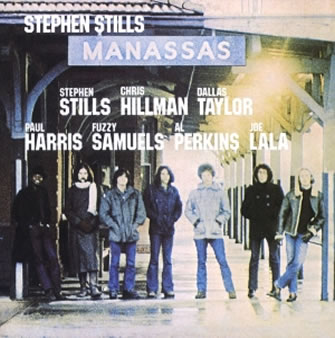
Manassas was an American rock band
formed by Stephen
Stills in 1971. Predominantly
a vehicle for Stills’ artistic vision, the band released two albums during
its active tenure, 1972’s Manassas and
1973’s Down
the Road. The band dissolved in October 1973.
Formation and first album
Manassas was formed in the fall of 1971,
following Stills' concert tour to support his album Stephen Stills
2(1971). While Stephen Stills 2 was Stills’ second
solo album, it was his first completed following the acrimonious 1970
breakup of Crosby, Stills, Nash & Young (CSNY), and was
not critically well-received. After a chance meeting with Flying
Burrito
Brotherssinger/multi-instrumentalist Chris Hillman in Cleveland,
where Stills’ tour schedule crossed paths with that of the Burritos – a
band that, by late 1971, had undergone multiple personnel changes and
was in financial trouble – Stills saw an opportunity to change
his artistic direction. He subsequently contacted Hillman, asking him,
along with Burritos’ guitarist Al Perkins and fiddler Byron
Berline, to join him in Miami at Criteria Studios to
jam. Stills also invited several members of his touring band – drummer Dallas
Taylor, bassist Calvin “Fuzzy” Samuels, keyboardist Paul
Harris and vocalist/percussionist Joe Lala – to
play at the session.
The musicians quickly gelled in the studio, and within
several weeks had recorded enough material at Criteria to fill a double-LP
album release. The band was capable of a wide musical range, with a repertoire
including blues, folk, country, latin, and rock songs. Rolling Stones bassist Bill
Wyman, a friend of both Hillman and Stills who visited Criteria during
the sessions.
|
|
was an early fan of the band, at one point expressing an interest
in joining. (Wyman would contribute to the sessions by helping Stills
re-write his to-date unrecorded song from 1968, “Bumblebee,” as
the blues/funk tune “The Love Gangster,” with Wyman also playing
bass on the track.) .The band
christened itself Manassas after Stills, who had an interest in American Civil
War history, orchestrated a photo shoot for them in Manassas,
Virginia, the site of the First and Second Battles
of Bull Run (1861 and 1862, respectively).
The band’s first album Manassas, a
double-LP sporting a cover photo from the shoot in Virginia, was released
in May 1972. The album was well received, quickly achieving RIAA Gold
Record status, and Manassas globally toured behind it for most of
1972, including television appearances on ABC-TV’s In
Concert in the United States and Beat-Club in
West Germany.
Second album,
hiatus, reformation and breakup
Upon returning to the U.S. from the European leg of Manassas'
1972 tour, Chris Hillman took several weeks away from the band to record a
reunion album with his pre-Burritos band the
Byrds, an effort that also included Stills’ ex-CSNY bandmate David
Crosby. Manassas
then regrouped and quickly completed their second album, Down the Road.
Initial sessions for the album were convened at Criteria Studios, but the band
moved the sessions in midstream to Caribou
Ranch in Colorado and
the Record Plant in Los
Angeles after Criteria staff engineers Ron
and Howard Albert expressed concern that the sessions were not producing
quality results. Down
the Road was completed in January 1973, and released in the spring
of that year to middling reviews and sales, falling short of RIAA Gold status;
it was the first album that Stills appeared on since 1968 not to "go Gold."
After completing Down the Road, Manassas
became dormant for several months. During the break, Stephen Stills married Véronique
Sanson, whom he had met in Paris during
Manassas’ 1972 European tour. As Hillman and Crosby's Byrds reunion
album was readied for release in March 1973, the band considered launching
a Byrds tour in support. When this did not materialize, two events occurred
instead that effectively doomed Manassas. First, Hillman accepted his management’s
proposal to, after satisfying Manassas’ scheduled touring commitments,
join a project involving ex-Buffalo
Springfield and Poco singer/guitarist Richie
Furay and Eagles songwriter/collaborator J.
D. Souther. Second, Crosby joined Neil
Young on tour, in a band that also included their ex-CSNY mate Graham
Nash. When this tour ended in mid-1973, Crosby, Nash and Young – encouraged
by their management, and hopeful to realize the financial benefits of a possible
CSNY reunion – regrouped in Maui to
discuss potential work on a new album. The three reached out to Stills, who,
putting aside the differences that led to CSNY's initial demise, cut
short his honeymoon break with Sanson to join the new project. CSNY worked
for several weeks in both Maui and Los Angeles on the project, Human
Highway, but these sessions were ultimately aborted due to various disagreements
within the band.
Stills was greeted by several sources of turmoil upon
returning from the Human
Highway sessions to regroup Manassas, as, in addition to Hillman’s
future commitment to work with Furay and Souther, Dallas Taylor had become
severely addicted to heroin, and Calvin Samuels had left the band for personal
reasons. Stills dealt with these issues by securing the services of drummer John
Barbata, with whom he had worked in CSNY during their 1970 tour, as a
backup for Taylor, and bassist Kenny
Passarelli of Joe
Walsh’s band Barnstorm to
replace Samuels. Samuels would return to the band for the last leg of its
1973 tour. Following the tour’s completion in October, Manassas’s
dissolution was publicly announced.
One of Manassas’ last shows, at San
Francisco’s Winterland
Ballroom in early October 1973, was made notable by the band’s
being joined onstage by first David Crosby and Graham Nash, and, later in
the show, by Neil Young.When
later asked about this occurrence, Chris Hillman would comment “I couldsmell a
CSNY reunion.” CSNY
would, in fact, regroup for a world tour in early 1974. Following this tour,
Stephen Stills would start a new band in 1975 with Kenny Passarelli and Joe
Lala, but this was short-lived; Passarelli would soon depart to join the Elton
John Band, and Lala would subsequently leave as well. Chris Hillman’s Souther-Hillman-Furay
Band, which would also include Manassas members Al Perkins and Paul Harris
(and eventually Joe Lala, who would later join Chicago),
released its first album in early 1974.
Legacy
Manassas is best remembered for their first album, and for their excellence
on stage. Regarding their first album Manassas, Criteria Studios
engineer Howard Albert has said “Manassas was one of the greatest and the
most underrated bands of the seventies. That double album, along with Eric
Clapton’s Layla – which
me and [Ron Albert] both worked on – stand as the most important and
best albums we’ve ever been a part of.” Of
the band’s prowess on stage, Stephen Stills has said “Manassas
was such a terrific band. It really had some structure and reminded me of [Stills’ previous
band] the Buffalo Springfield at its best. Manassas could play anything.”
|